

For professional truck drivers, staying connected on the road is part of the job, but handling calls safely is just as important. Clear conversations, easy hands-free use, and awareness of your surroundings all matter behind the wheel. Between a speakerphone and a mono headset, which one offers the clarity, comfort, and convenience you actually need? Read on to see how the two compare and which setup fits life on the road.
When you’re behind the wheel for hours at a time, a phone call isn’t just another call. Engine noise, traffic, road conditions, and constant movement can make it harder to hear clearly or stay focused while talking. Yet for many truck drivers, calls with dispatchers, customers, and teams are simply part of getting the job done.

That’s where hands-free communication becomes essential. But not every hands-free setup works the same way on the road. The right setup needs to keep calls clear, minimize distractions, and stay comfortable through hours behind the wheel. For professional truck drivers, the question isn’t simply how to stay connected, it’s how to do so without compromising comfort, quality of the call, and awareness of the road.
In this guide, we’ll look at two common ways to stay hands-free on the road – using a speakerphone or a mono headset – and what drivers should consider when deciding which setup works best for their daily routes.
What Makes Hands-Free Communication for Truck Drivers Essential?
A long haul can mean hours of engine noise, highway traffic, and changing road conditions. When a call comes through, being able to hear the other person clearly and respond without reaching for your phone can make a real difference. Keeping your hands available for driving also means you can stay focused on the road instead of handling your phone during a call.
For truck drivers, a hands-free setup also needs to fit naturally into the cab. It should be easy to use when a dispatcher calls unexpectedly, comfortable enough for longer conversations, and reliable when the road gets noisy. These details may seem small, but they become much more noticeable when you’re behind the wheel for eight, ten, or even more hours a day.

Staying aware of what’s happening around you matters just as much. Traffic can change quickly, and drivers need to notice vehicles, road conditions, and other sounds around the truck while handling necessary calls. A good setup should make communication easier without pulling your attention away from what is happening on the road.
That is why things like call clarity, microphone quality, comfort, privacy, and ease of use are worth considering when looking at fleet communication solutions designed for drivers who spend most of their day on the road. Most importantly, any setup should support safer driving habits rather than encourage drivers to interact with their phones while moving.
Mono Headset vs. Speakerphone: A Side-by-Side Comparison
Both options let you take calls without holding your phone, but they feel quite different when you’re actually sitting behind the wheel. The differences can also affect how easily you stay focused on the road during a conversation.
Call Clarity
A truck cab can get pretty noisy, especially on the highway. With a mono headset for truck drivers, the audio is directed straight to your ear, so you can focus more easily on the person you’re talking to without constantly adjusting the volume.
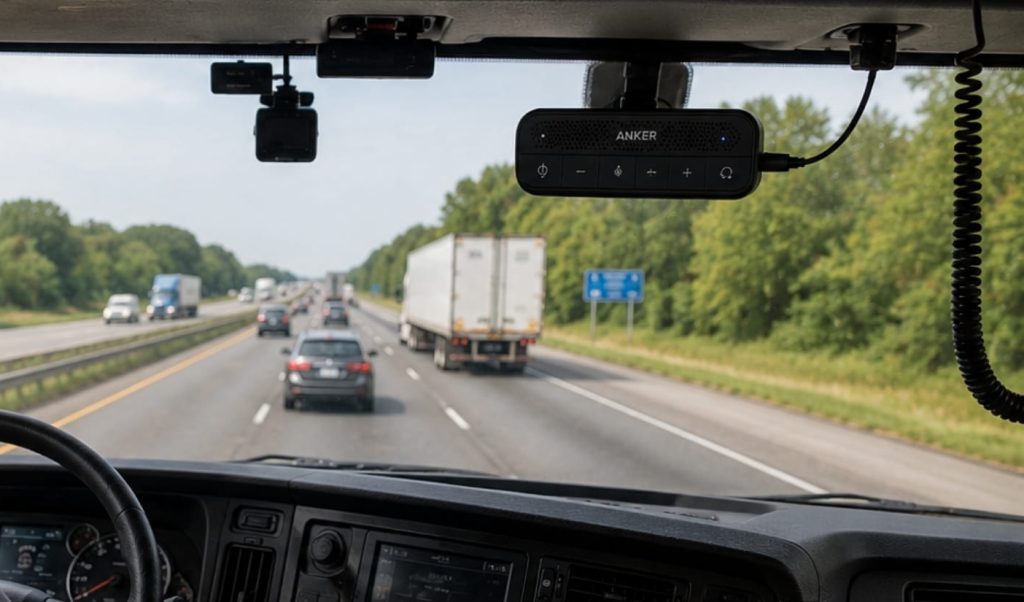
A speakerphone plays the call through the cab, which means the conversation has to compete with engine and road noise. You may end up turning the volume up just to hear clearly, which can make it harder to stay aware of other sounds around you.
Voice Pickup
Hearing the other person clearly is only half of the call. They also need to hear you without constantly asking, “Can you hear me?”
A mono headset keeps the microphone close to your mouth, making it easier for your voice to come through clearly even when the engine is running and the road is noisy. With a speakerphone, the microphone sits farther away from you, so it has to pick up your voice from across the cab while also picking up the sounds around you.
This can make a difference when you’re checking in with dispatch, confirming a delivery, or trying to sort something out during a busy route. With a mono headset, you can speak normally without having to lean toward the microphone or repeat yourself every few sentences.
Staying Connected Beyond the Cab
A truck driver’s work doesn’t always stop when the truck does. You may need to step out to check a load, speak with someone at a delivery site, inspect the vehicle, or handle something outside the cab while staying on a call.
A mono headset stays with you when you leave the driver’s seat, so you can continue a conversation without having to end the call or switch devices. A speakerphone, on the other hand, is tied to the truck, making it more useful when you’re staying inside the cab. For drivers who regularly move between the cab and the road, that difference can make a mono headset much more practical for the whole workday.
Privacy
Not every conversation needs to be heard by everyone in the cab. A mono headset keeps the conversation closer to you, which can be useful for work-related details or personal calls.
With a speakerphone, the conversation is played aloud, so anyone else in the cab can hear it. For solo drivers, this may not be an issue, but a more private setup can be useful when conversations involve customer information, delivery details, or other work-related matters.
Safety on the Road
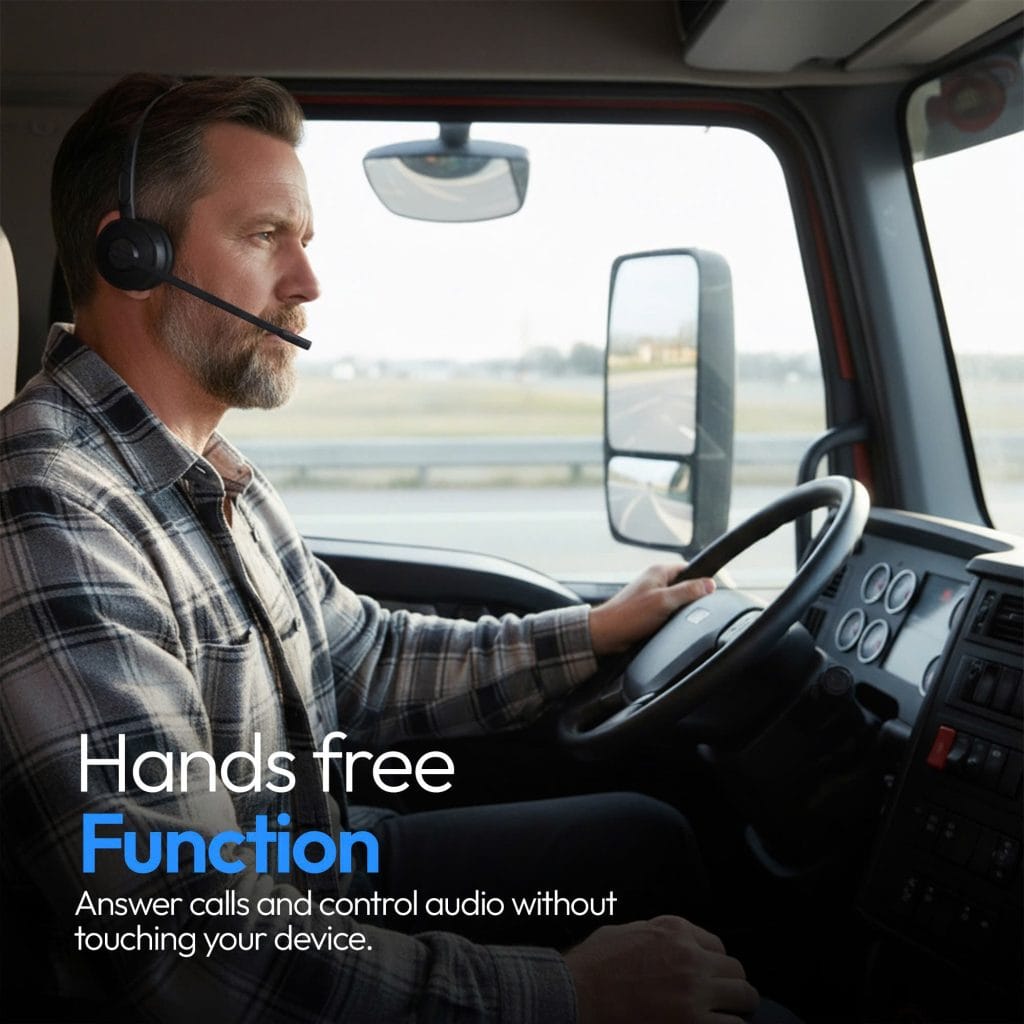
For truck drivers, safety should always come first. A hands-free setup should make it easier to handle necessary calls without taking your hands off the wheel or pulling your attention away from the road. A mono headset can help keep your phone out of reach while leaving one ear open, allowing you to stay connected while remaining aware of what is happening around you.
A speakerphone can also support hands-free calling, but drivers may still need to reach out to adjust the volume or interact with the phone during a call. Whichever setup you use, it is important to set everything up before getting on the road and avoid handling your phone while the truck is moving.
Why Philips TAL Series Fits the Demands of Everyday Driving
Once you know what matters on the road, the next question is whether your headset can keep up with a full day behind the wheel.
The Philips TAL Series gives truck drivers a range of options, with models across the TAL3000, TAL4000, TAL5000, and TAL7000. Each model offers its own combination of features, giving drivers more flexibility to find a headset that fits the way they work and communicate on the road.
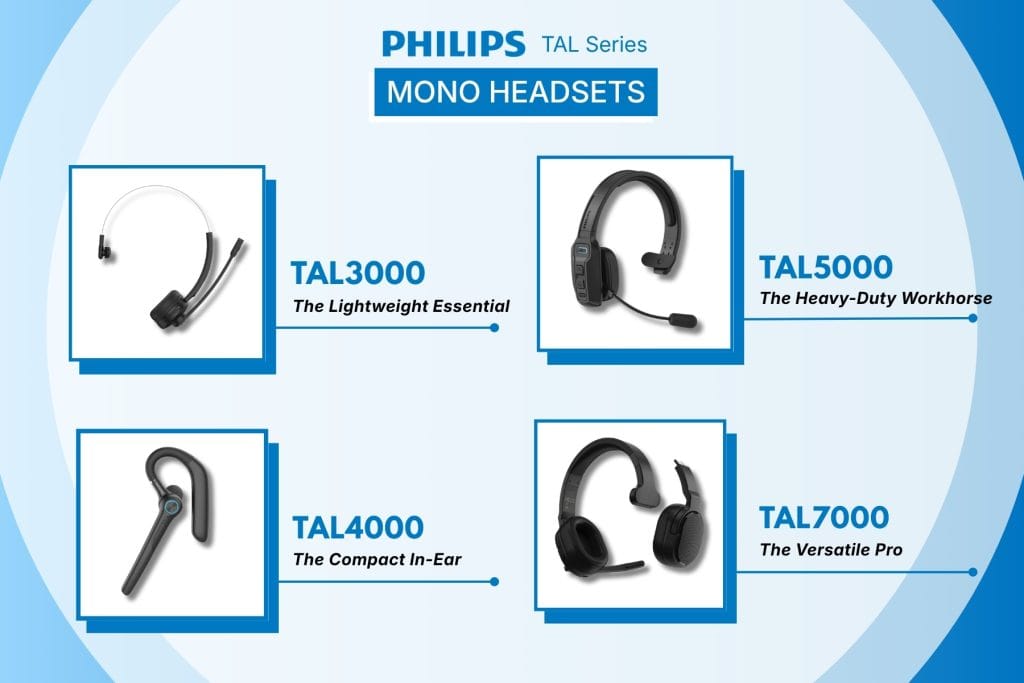
Philips TAL3000 provides a practical starting point for drivers looking for reliable everyday calling, while the TAL4000 adds more features for those who want a more refined experience. For drivers who spend long hours on the road and want more from their headset, the TAL5000 and TAL7000 offer more advanced features and a more premium experience.
Across the range, the mono headset design keeps audio focused on one ear while leaving the other ear open. This can be useful for truck drivers who need to stay aware of their surroundings while taking calls. Whether you’re talking to dispatch, coordinating a delivery, or checking in with your team, you can stay connected without completely blocking out what’s happening around you.
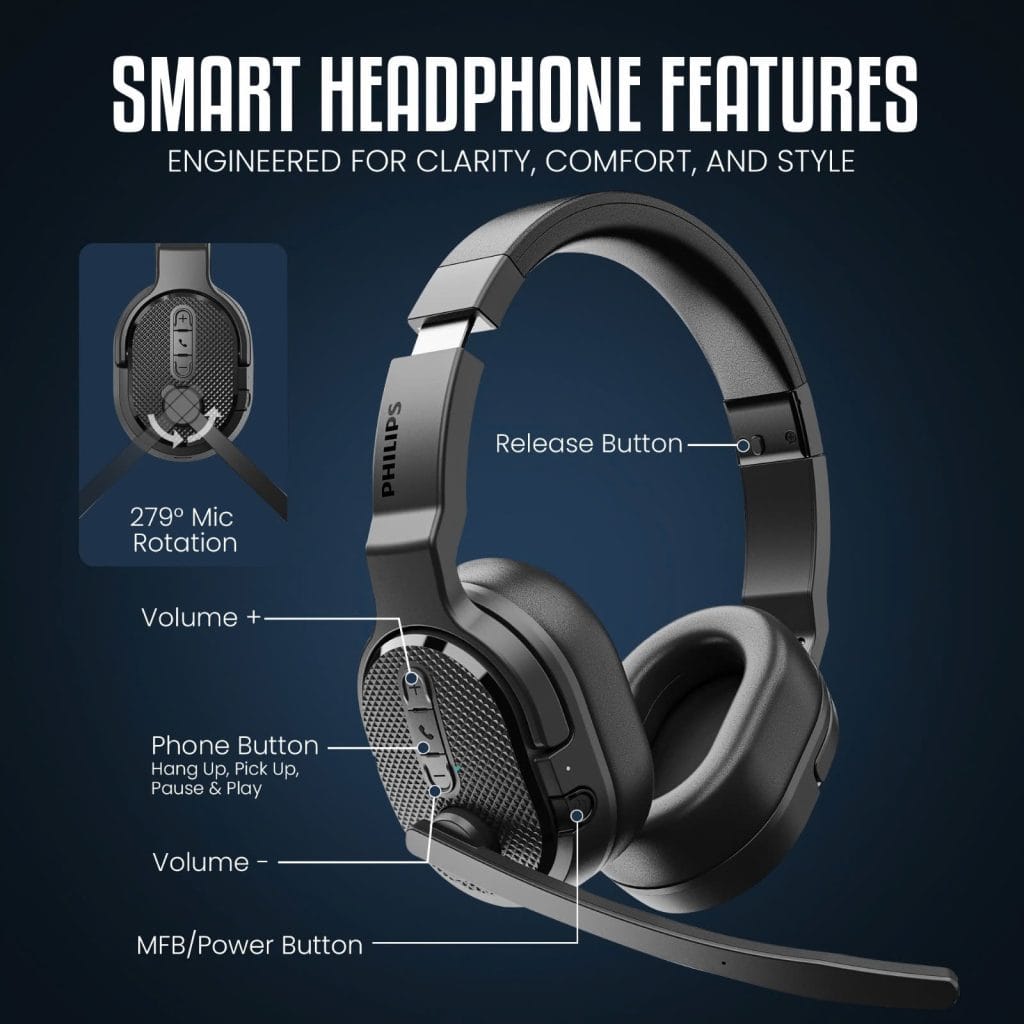
Comfort also matters when you’re wearing a headset for hours at a time. Depending on the model, the Philips TAL Series offers different features designed for extended use, while wireless connectivity keeps your phone out of your hands during calls. Battery performance also varies across the TAL Series, with models offering long-lasting power for extended use and fast charging to help you get back to your calls quickly when the battery runs low. For truck drivers spending most of the day on the road, that means less time worrying about charging and more time staying connected throughout the route.
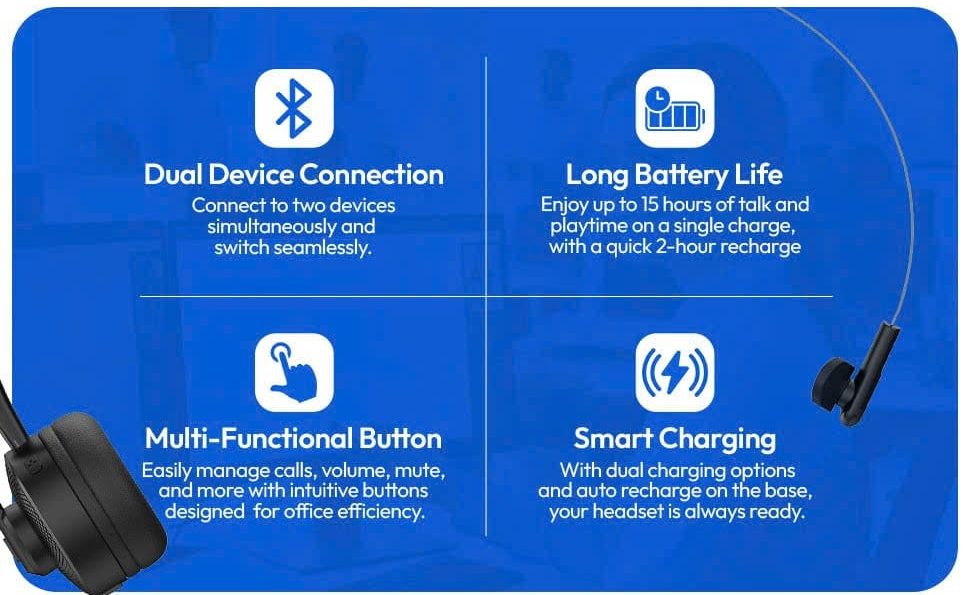
And truckers aren’t the only ones who can benefit from the TAL Series. Its range of models can also fit the daily needs of customer service agents, delivery drivers, field workers, and other professionals who spend hours communicating while working. From handling customer calls at a desk to coordinating deliveries on the move, the same focus on clear communication, comfort, and hands-free use can make a difference across different jobs.

For drivers who spend most of their working day behind the wheel, the Philips TAL Series is more than a single headset. From the TAL3000 and TAL4000 to the TAL5000 and TAL7000, the range gives you multiple ways to find a mono headset for truck drivers that fits your everyday driving routine while helping you stay connected without putting your phone in your hand.
Final Word: When Every Mile Counts, a Mono Headset for Truck Drivers Delivers the Better Experience
A speakerphone can be convenient when you want something simple and do not mind having your conversation play through the cab. But when calls are a regular part of your workday, a mono headset has some clear advantages.
You get focused audio, a microphone closer to your voice, more privacy, and a setup that can stay with you through long hours on the road. You also do not have to keep reaching for your phone every time a call comes in, which can help you keep your hands where they belong while driving.
Of course, no hands-free device replaces good driving habits. Drivers should always stay focused on the road, follow local laws, and avoid handling their phones while the vehicle is moving. The right headset simply makes it easier to handle necessary communication without adding another distraction to a long day behind the wheel.

When every mile counts, a mono headset can make staying connected feel like a natural part of the drive instead of another thing you have to manage.
Contact the JAACX distribution team today to request an enterprise product quote or explore volume options for the Philips TAL Series at https://www.jaacx.com/contact-us/.
0 Comments