


Background noise can make it harder to stay focused, hear clearly, or keep conversations going, especially when you are on the road or in a busy environment. Noise canceling headsets can help reduce unwanted sounds and make everyday communication more comfortable. Read on to discover how ANC and ENC work, why they matter, and how they can fit into different work and listening situations.
Noise is part of everyday life, from traffic and construction to crowded public spaces, busy streets, public transportation, and the constant sounds of devices and conversations around us. While some background sounds are easy to ignore, constant noise can make listening and communicating more difficult, especially when focusing on audio for extended periods or speaking through phones and other communication devices.

Headset technology has continued to evolve to address these everyday challenges. Noise cancellation is now available in different forms, with Active Noise Cancellation (ANC) and Environmental Noise Cancellation (ENC) helping reduce unwanted noise in different ways. While both technologies address unwanted noise, each one plays a different role in how a headset handles noise.
These features can be particularly useful across different types of work and daily routines. For truckers and delivery drivers, reducing surrounding road noise can make calls easier to manage. For call center agents and office workers, clearer communication can help when working in busy or shared spaces.
In this blog, we’ll look at how ANC and ENC work and how they can make a difference in your listening and communication experience.
Noise Cancellation in Modern Headsets
Noise cancellation can play different roles depending on what you need a headset to do. Some technologies focus on reducing the sounds you hear through the speakers, while others work to make your voice clearer to the person on the other end of a call. This distinction is especially important for headsets used for work and communication.
Understanding ANC and ENC
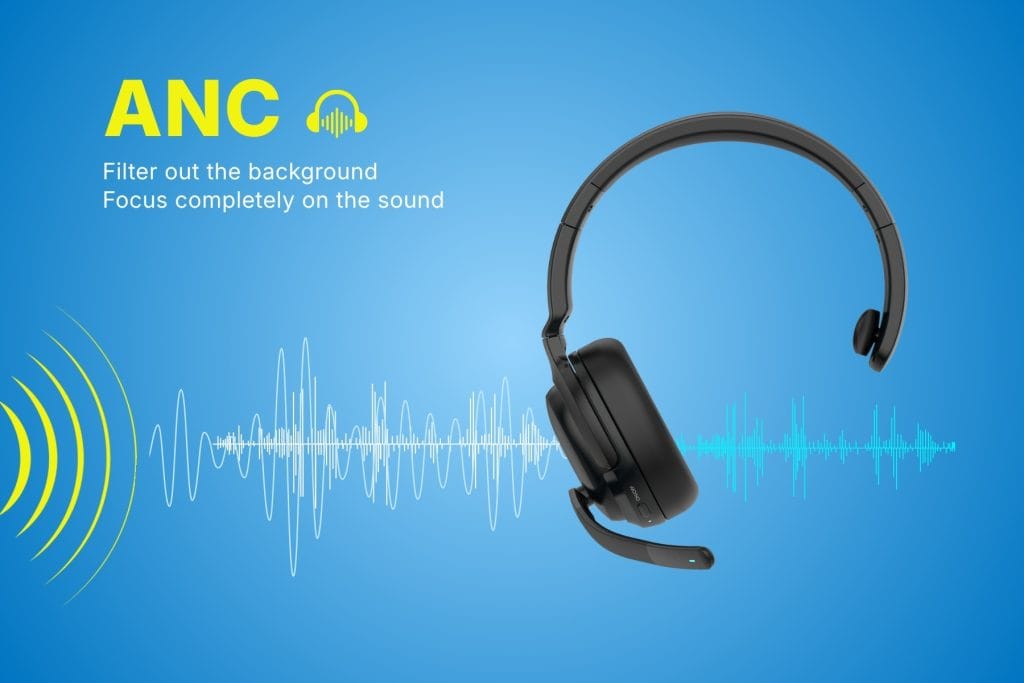
Active Noise Cancellation (ANC) is designed to reduce unwanted ambient sounds that reach your ears. It uses microphones to detect surrounding noise and generates an opposing sound signal to help cancel it out. This can make it easier to focus on music, calls, or other audio in noisy environments.
Environmental Noise Cancellation (ENC) focuses on the microphone rather than what you hear. It uses microphone processing to detect and reduce surrounding sounds picked up while you are speaking, helping your voice come through more clearly during calls. This can be particularly useful in environments with traffic, conversations, or other background noise.
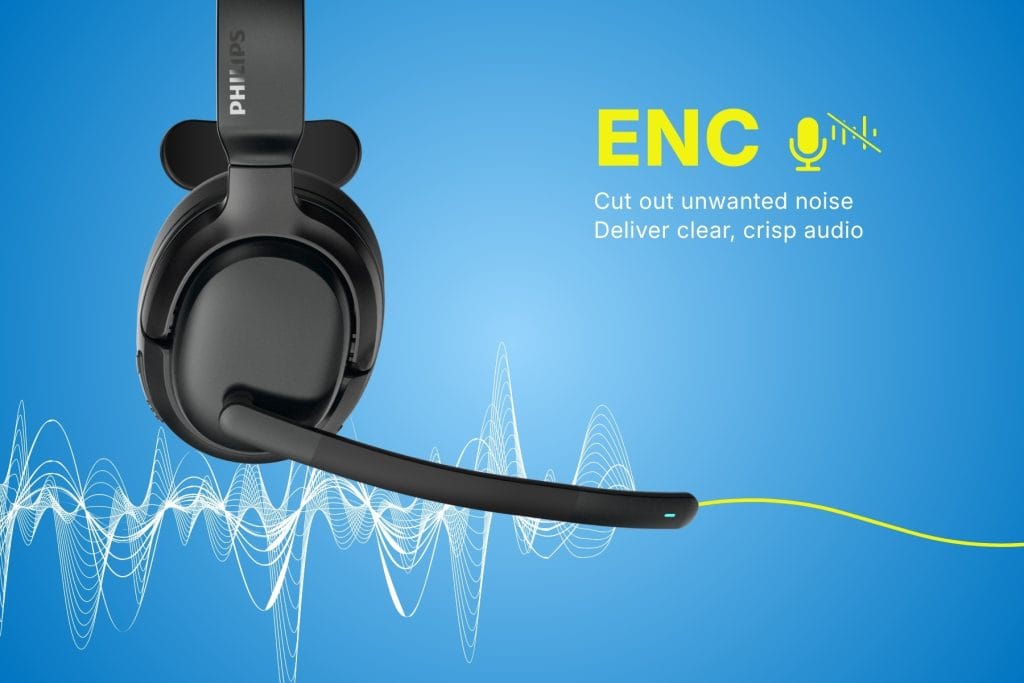
Although both technologies involve noise cancellation, they address different sides of the listening and communication experience. ANC helps manage what you hear, while ENC helps manage what the other person hears from your microphone.
ANC vs. ENC: How The Two Approaches to Noise Cancellation Differ?
The main difference between ANC and ENC comes down to where the noise is being managed and who benefits from the reduction. ANC works on incoming sound for the headset wearer, while ENC works on microphone input to improve the voice transmitted during a call.
ANC | ENC | |
Main purpose | Reduces surrounding noise you hear | Reduces surrounding noise picked up by the microphone |
Focus | Listening experience | Call communication |
Helps | The headset wearer | The person listening to the call |
Useful for | Music, calls, and focused listening | Voice calls in noisy environments |
For example, a truck driver wearing a headset with ANC may experience less of the surrounding road noise while listening. With ENC, the same driver’s voice can be easier for the person on the other end of the call to hear despite the noise around them.
For many modern headsets, ANC and ENC can therefore complement each other rather than serve as competing features. A headset that combines both can address unwanted noise on both sides of a conversation: helping the wearer listen with fewer distractions while helping their voice come through more clearly.
Why do ANC and ENC Matter?
Understanding how ANC and ENC work is only part of the picture. Their real value comes from how they affect everyday listening and communication. In noisy environments, the right noise cancellation features can make calls easier to follow, reduce distractions, and help conversations stay clear.
Better Listening in Noisy Environments
Background noise can compete with the audio coming through a headset, making it harder to follow conversations or stay focused on what you are listening to. Here are how ANC and ENC address different parts of this challenge, helping create a more manageable listening and communication experience.
Enhanced Call Clarity
When you are taking a call in a noisy environment, surrounding sounds can make it harder for the person on the other end to hear your voice. ENC helps reduce unwanted environmental sounds picked up by the microphone, allowing your voice to come through more clearly during conversations.

Reduced Background Noise
ANC helps reduce ambient sounds that reach the headset wearer. This can be useful when listening in places with constant background noise, such as traffic, conversations, or other activity. By reducing some of these distractions, ANC can make calls and other audio easier to follow.
More Focused Listening
Less surrounding noise can make it easier to concentrate on the audio you actually want to hear. Whether you are listening to a call, music, or another audio source, noise cancellation can help create a less distracting experience in busy environments.
For Truckers and Delivery Drivers
For truckers and delivery drivers, noise can change throughout the day. Traffic, engine sounds, loading areas, rest stops, and conversations around the vehicle can all make it harder to hear what is being said or stay focused on a call. This is why headsets for truck drivers often need to handle more than just the audio coming through the speakers.

ENC can be useful during calls because it focuses on the sound picked up by the microphone. By filtering out surrounding noise, it can make the driver’s voice easier for the person on the other end to hear, even when the environment around the driver is busy. ANC takes a different approach by reducing some of the surrounding sounds reaching the wearer, which can make calls and other audio more comfortable to listen to.
For drivers who spend hours on the road, these features can make everyday communication easier to manage across different environments, from the cab to a busy loading area or a quick stop along the route.
For Call Center Agents and Office Workers
Call center agents and office workers often communicate through devices for hours at a time, whether they are speaking with customers, joining meetings, or handling day-to-day conversations. In shared workspaces, nearby conversations, keyboard sounds, office equipment, and general activity can create a steady layer of background noise that becomes difficult to ignore.

ENC can help keep the speaker’s voice clearer by reducing surrounding sounds picked up by the microphone. This can be particularly useful when the person on the other end needs to follow instructions, discuss details, or have a conversation without constantly asking for something to be repeated. ANC works from the listener’s side, reducing some of the surrounding noise reaching the wearer and making it easier to concentrate on the call or other audio.
For people who spend much of their workday communicating, having the right combination of these features can make listening and speaking more comfortable, especially in busy shared environments.
Philips TAL Series Mono Headsets: Bringing ANC and ENC Into Communication
The Philips TAL Series brings noise cancellation features into headsets designed for everyday communication, with different models offering different combinations of ANC, ENC, and other features. From mono headsets for work calls to models that combine noise cancellation with wireless listening, the series offers options for different working environments and listening needs.
ENC Boom Microphones for Clearer Calls
Clear communication is a key focus across the Philips TAL Series. The TAL3000, TAL5000, TAL7000, TAL7500, TAL7600, TAL8000, and TAL9000 feature ENC boom microphones designed to reduce surrounding noise picked up during calls. Depending on the model, this includes features such as flippable boom microphones and up to 94% noise blocking on the TAL7500 and TAL7600.
The TAL4000 uses a different approach with two microphones and AI call technology that filters out background noise, helping maintain clear voice communication in environments such as noisy truck cabs or rest stops. While the technology differs, the goal is similar: helping your voice remain easier to hear when the surroundings are not quiet.

Together, these microphone technologies make the TAL Series relevant for a range of communication-heavy routines, from truckers and delivery drivers taking calls on the road to call center agents and office workers working around other people.
ANC for Added Listening Comfort
The TAL9000 takes noise management a step further by combining its 98% noise-blocking ENC boom microphone with Active Noise Cancellation (ANC). While the ENC microphone helps reduce surrounding sounds picked up during calls, ANC works on the audio reaching the wearer’s ears, helping reduce unwanted ambient noise while listening.
This combination gives the TAL9000 an advantage for users who need to manage noise on both sides of a conversation. Your voice can be kept clearer for the person you are speaking with, while ANC helps create a quieter listening experience on your side. The result is a headset designed not only for clearer calls, but also for more comfortable listening throughout the day.
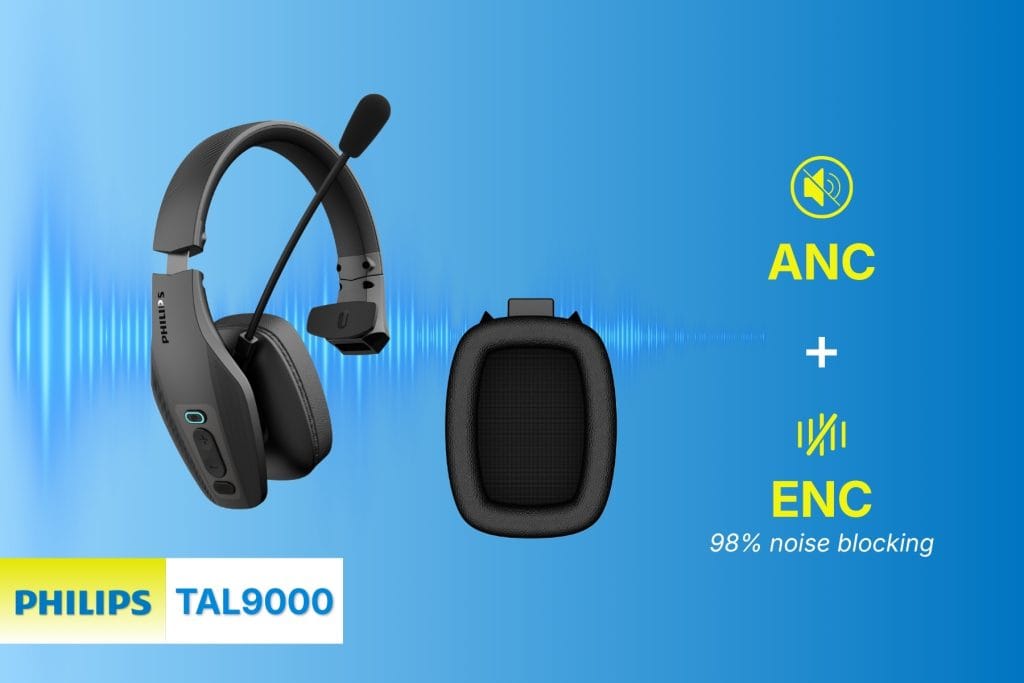
The TAL9000 also gives users the flexibility to switch between mono and stereo listening, making it suitable for different communication and listening situations. For those who spend long hours moving between calls, audio, and noisy environments, having both ENC technology and ANC technology in one headset brings the two sides of noise management together.
More Than Just Noise Cancellation
The Philips TAL Series also brings together features designed for different work routines and listening preferences. Across the series, models vary in battery life, connectivity, durability, controls, and headset design.
For everyday communication, the TAL3000 offers Bluetooth connectivity, an adjustable steel headband, easy button controls, and up to 15 hours of play time, while the TAL4000 adds an IPX4 water-resistant design, dual-axis adjustable hinge, and up to 36 hours of total play time.
For longer listening sessions, the TAL5000 features a 36 mm driver and up to 35 hours of play time, while the TAL7000 uses a 40 mm driver with the same play time. Both also support stereo listening.
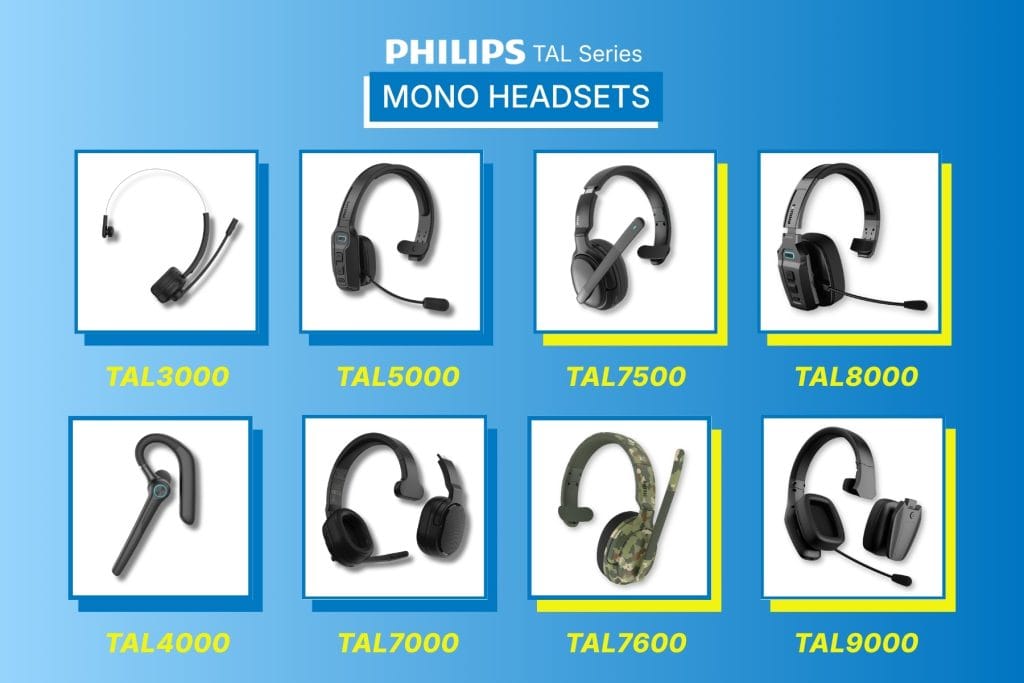
The TAL7500, TAL7600, and TAL8000 offer Bluetooth 6.0, IP54 protection, and around 60 hours of music time, with the TAL8000 also supporting the Philips App and on-ear volume controls. The TAL7600 shares the TAL7500’s core specifications with a camouflage appearance. The TAL9000 adds an 800mAh battery, up to 60 hours of music playback, around 45 hours of talking time, Philips App support, and mono/stereo listening.
With options ranging from practical everyday models to feature-rich headsets with longer battery life and added controls, the TAL Series gives users flexibility to choose a headset that fits their workday and listening habits.
ANC vs. ENC: Finding the Right Fit for Your Needs
ANC and ENC may both help manage unwanted noise, but they serve different purposes. ANC technology focuses on reducing surrounding sounds for the person wearing the headset, while ENC technology works through the microphone to help keep the user’s voice clearer during calls. Knowing the difference can make it easier to choose the features that match how and where you use a headset.

The Philips TAL Series brings these different approaches together with a range of models designed for different work and listening needs. From practical mono headsets for everyday calls to models with longer battery life, app support, mono/stereo listening, and the added listening benefits of ANC, there are options for different routines and environments.
For individuals looking for the Philips TAL Series for your workplace communication and listening, visit Where to Buy to find a retailer and explore the available models.
For businesses interested in ordering the Philips TAL Series in bulk, contact our sales team to request an enterprise quote or discuss available volume options here.
0 Comments